How do phones affect school in 2025?
Written by: Jazmine Hernandez
Phones aren't new, but they have become the norm. Everywhere you go you'll see phones; for example, when walking into a classroom full of students you don't usually see them doing their work but instead paying attention to their electronics. Through the years, phone use has increased to the point of 95% of teen students having a phone. I have interviewed three sets of people, a teacher with a strict policy, a teacher with a more lenient phone policy, and the students of Riley High School on what they feel about the phone policy in our state.
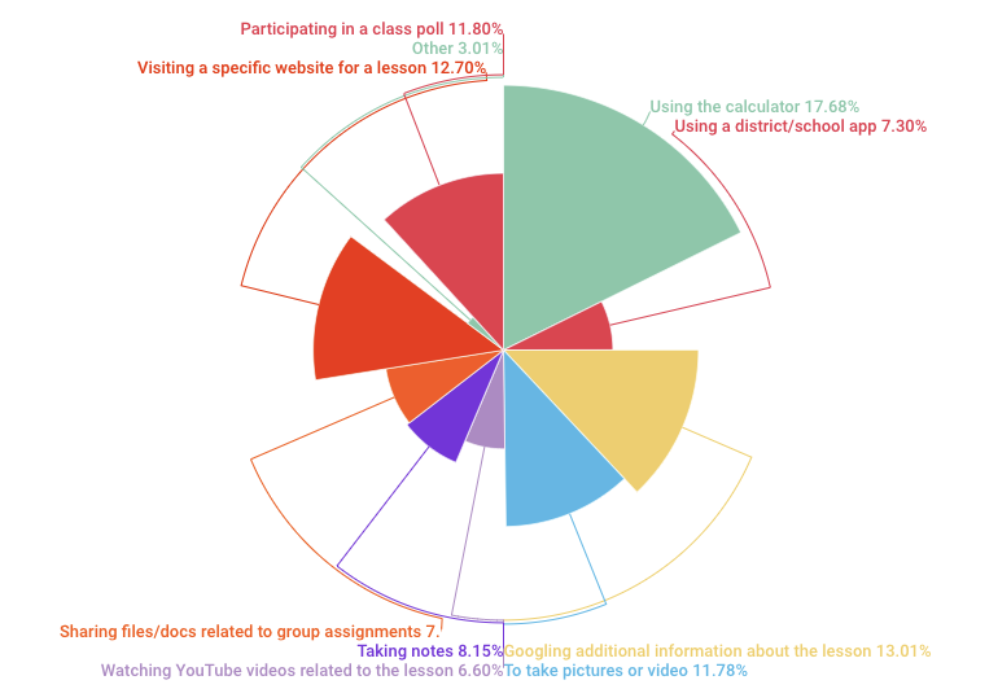
My interviewee, Mrs. Knappenberger, is a world history teacher for our freshman class at Riley. In both of her classes, AP and Regular, you don’t see a singular phone in sight. Her cell phone policy is strict but it's for the best according to her, “because you can't focus on 2 things at once. You just can't. Do you know what I mean? And so I'm strict about that because I want kids to be successful in school, right?” Mrs. Knappenberger, during the time I was in her class, was extremely strict with phones but that helped me out in the later run seeing as my screen time has decreased exponentially during school hours.
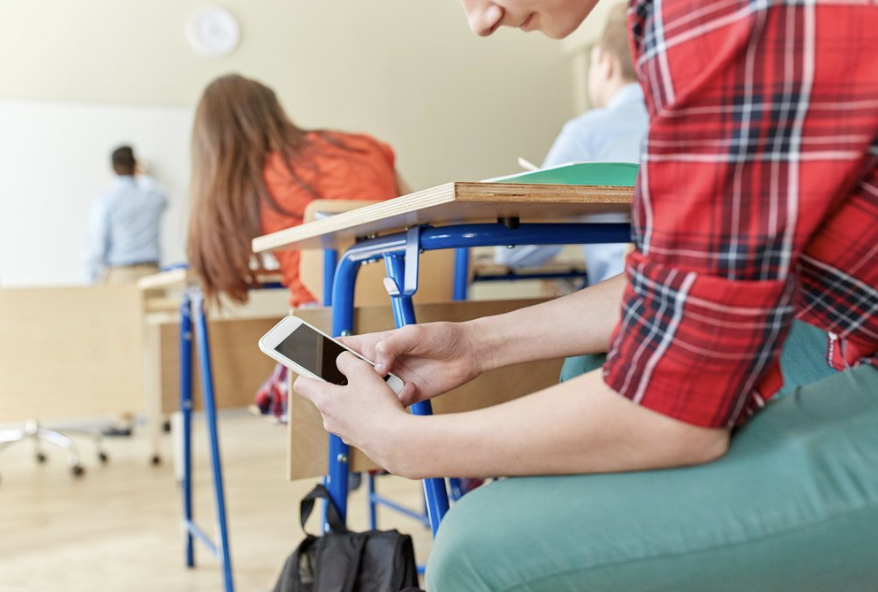
Learnsafe.com, Martha Custard
Another article on the topic: https://www.nea.org/nea-today/all-news-articles/take-cellphones-out-classroom-educators-say
Mr. Harman is yet another history teacher, although he doesn't teach freshmen but instead juniors. During our interview he explained to me that compared to freshman, juniors are much more mature and careful, hence why he is lenient with his phone policy. Which I totally agreed to; freshmen nowadays are constantly on their phones, considering they're fresh out of middle school, while juniors should be used to this policy by now. He stated that there are benefits to phones, “it is a marvelous tool to find answers to things, to find resources and to be able to jump into something else when you work.”
With the example of google, phones are truly a good source. For example, students get curious during history lessons, doing a quick google search would help them out in the long run.
Now, most importantly, our students. Around 30 students have answered my Google Form based on phone usage in school. Here is one response that answered the question, “What are your thoughts on Indiana's phone policy?”
“I believe it should be up to the students if they use their resources correctly so that those who can control themselves and use their phones for academic or studying purposes are not punished..”
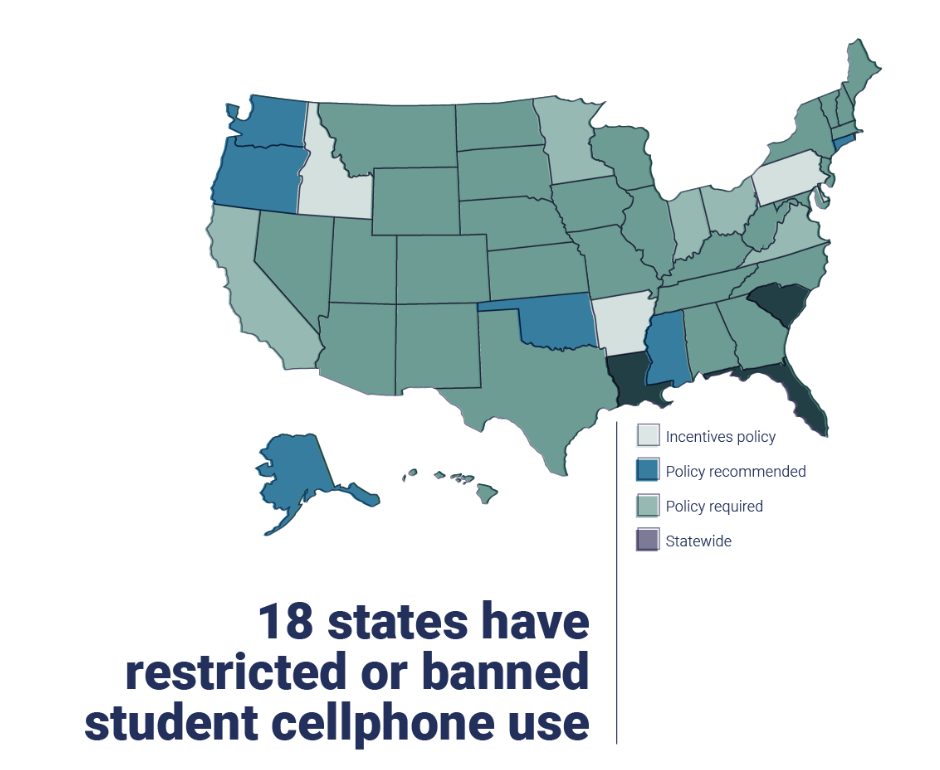
As a student myself, I agree completely with this interviewee. The perspective of a student when it comes to the phone policy is the most important considering that the policy was created for them. The way students follow the policy however will most likely affect the way they learn as well.
Another article on this topic: https://www.panoramaed.com/blog/how-do-cellphones-affect-students-in-school
coloradoea.org, State of Education report
Seeing as technology is continuing to advance, schools now might not be the same 50 years from now. By this time, we would most likely have teachers using AI or maybe even AI teachers! Students will be able to learn greater things with this newly found technology, but would they really pay attention is the question. That is only up to our imagination for now.